
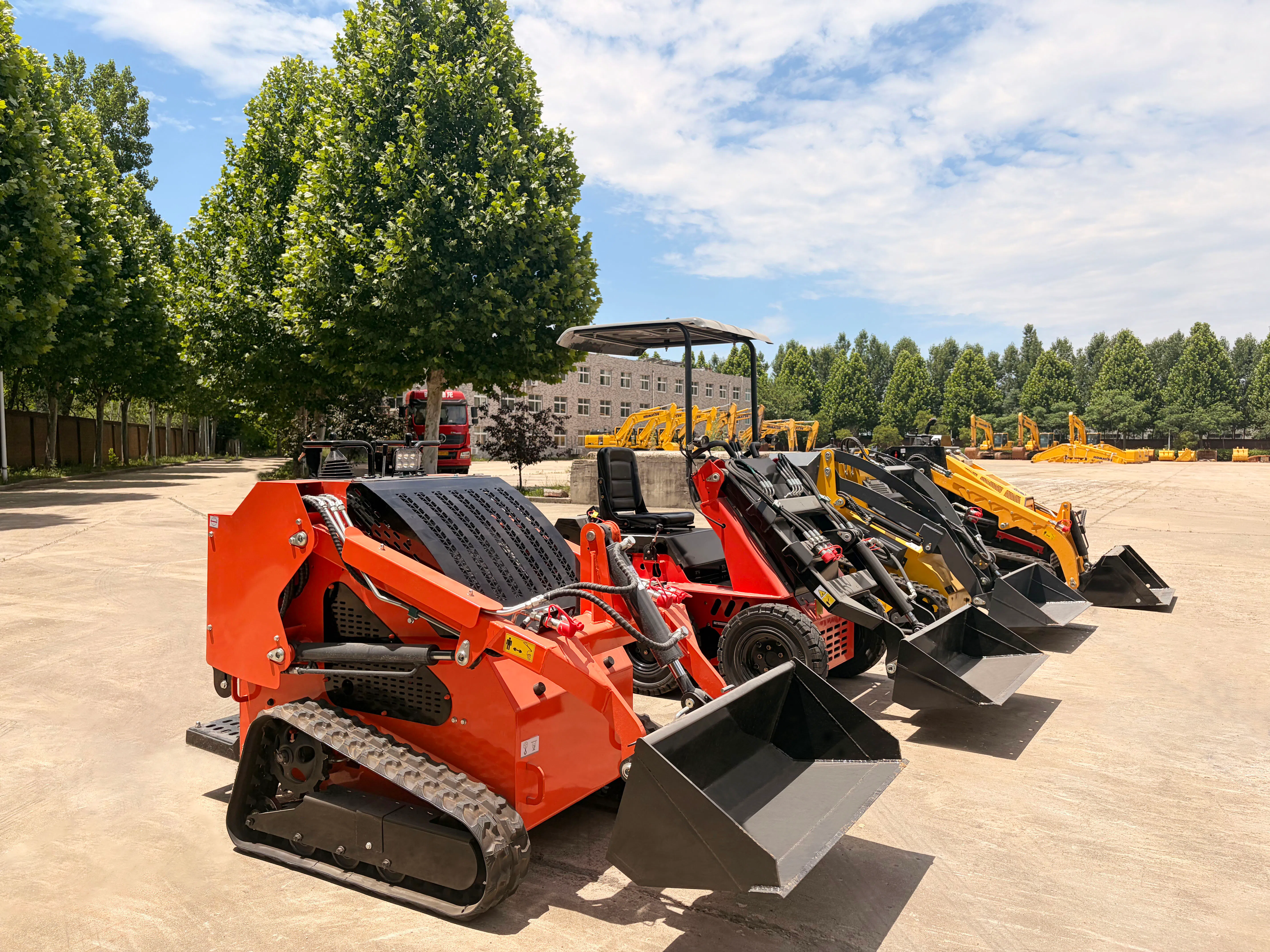
In industries including construction, landscaping, agriculture and equipment rental, skid steer loaders have become essential compact construction machinery. The market mainly offers two core types: track skid steer loaders and wheeled skid steer loaders. Obvious gaps exist between them in chassis design, terrain passability, load capacity, applicable scenarios and maintenance costs. Many buyers make wrong purchases due to unclear product differences, resulting in mismatched machines, high failure rates and low working efficiency. This article comprehensively compares the two models from six dimensions: terrain adaptability, applicable industries, power & hydraulic performance, load stability, operation cost and export compliance, sorting out core selection standards to help buyers pick the right equipment for their business.
1. Chassis Structure & Terrain Passability
Track Skid Steer Loaders
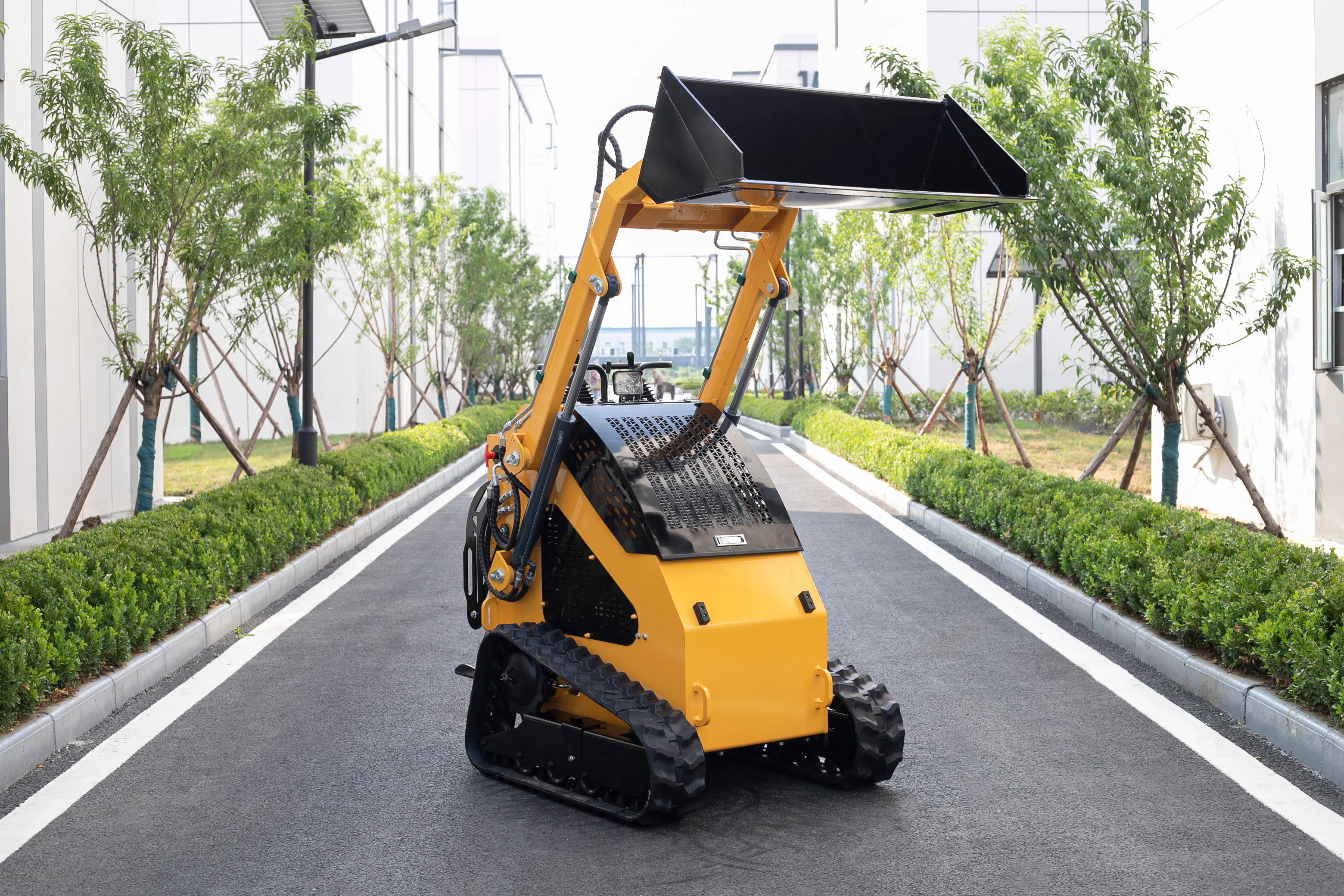
Equipped with wide triangular rubber tracks, track skid steer loaders feature a larger ground contact area and extremely low ground pressure. When working on muddy construction sites, sand, soft orchard soil and lawns, they rarely slip or get stuck, and will not crush grass or plant roots, greatly cutting extra ground restoration costs. Tracks deliver strong friction and traction for climbing slopes, mountain land clearing and earthmoving on uneven terrain without sliding. The machines have balanced counterweight and heavier overall weight, providing superior stability when lifting heavy loads even during long-hour continuous work on rough ground. Optional widened tracks can further reduce ground pressure for delicate green spaces.
Wheeled Skid Steer Loaders
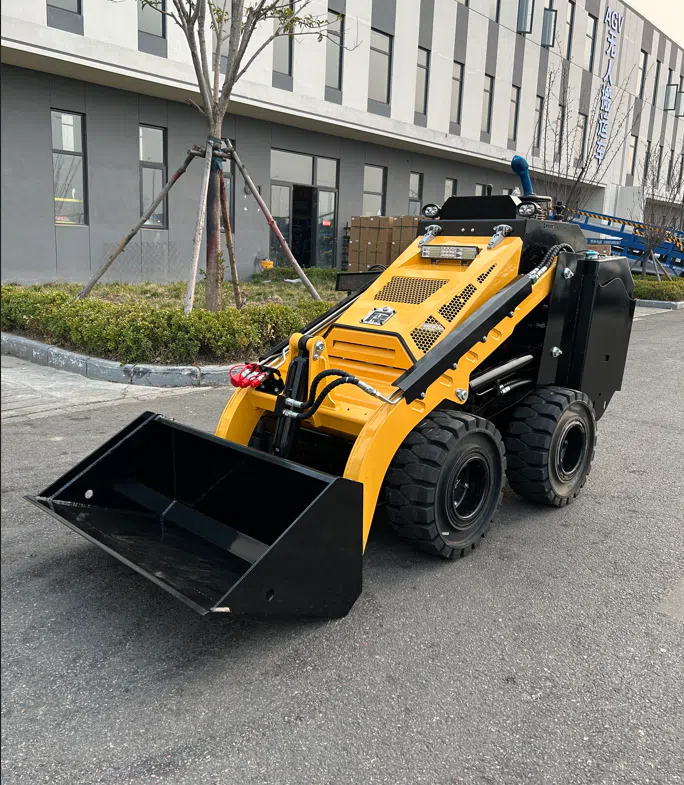
Fitted with heavy-duty solid rubber tires, wheeled skid steer loaders have low rolling resistance and travel faster on hard surfaces such as concrete and asphalt for efficient short-distance transport. The simple tire chassis will not scratch epoxy floors or hard pavement, making them ideal for enclosed indoor work. However, tires have tiny contact areas and high ground pressure. They slip and get stuck easily on mud, sand or steep slopes, and cannot sustain long-term work on soft ground. Limited tire grip raises safety risks on steep terrain, and the machine shakes severely when lifting heavy materials, only suitable for light-duty tasks on flat dry ground.
2. Applicable Industries & Working Scenarios
Suitable Scenarios for Track Skid Steer Loaders
- Agriculture & Forestry: Orchard fertilization, greenhouse material transport, farm tillage, lawn maintenance and seedling transplanting without damaging vegetation;
- Outdoor Construction: Mountain land clearing, foundation backfilling, rural muddy infrastructure, small-scale excavation, river dredging and large-area landscaping;
- Overseas Rental Business: Popular in rainy regions of Europe, America and Africa. Models like V1000 and JT450T achieve high rental utilization;
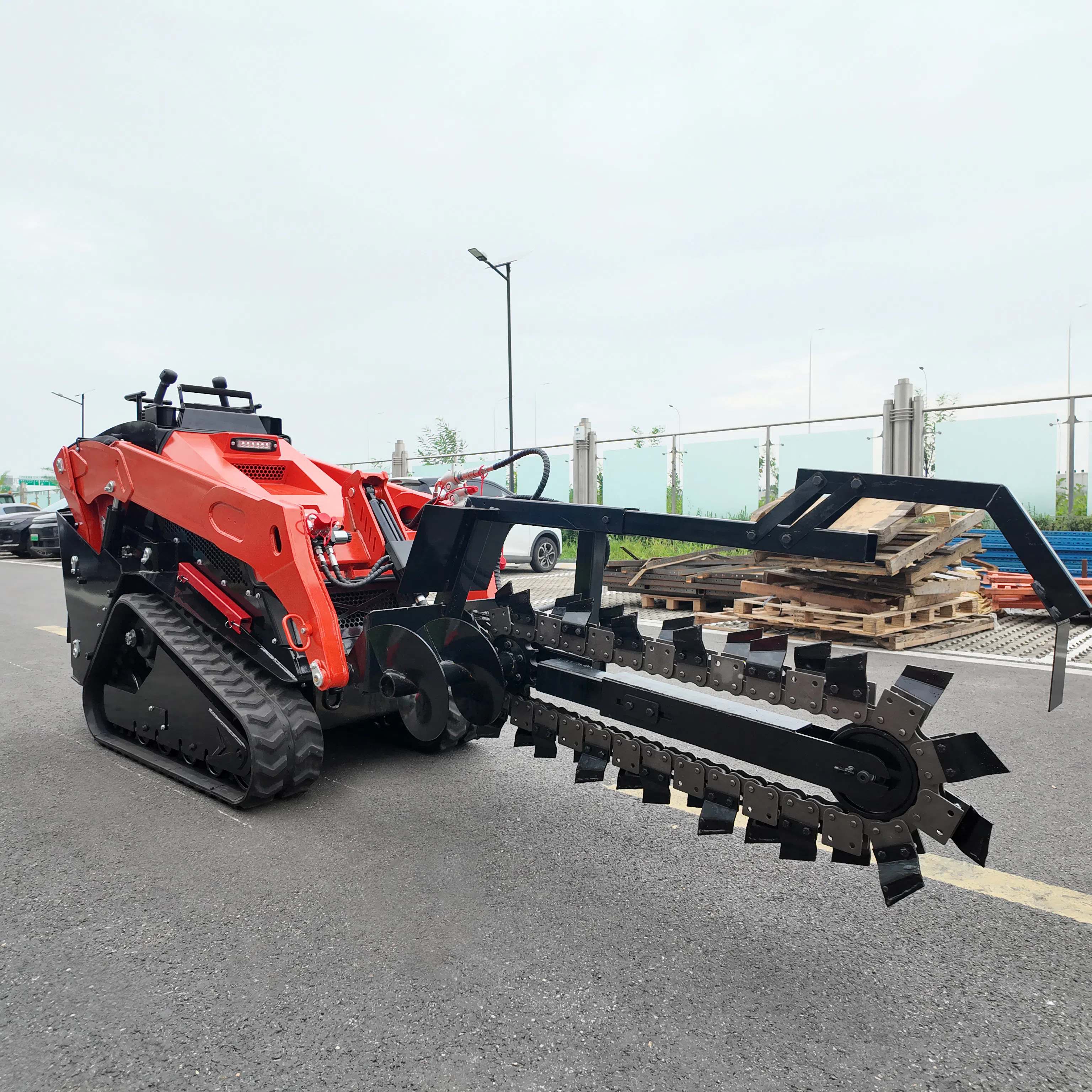
- Heavy-duty Multi-task Work: Compatible with heavy attachments including hydraulic breakers, wood chippers, trenchers and snow blowers for all-day non-stop heavy operation.
Suitable Scenarios for Wheeled Skid Steer Loaders
- Indoor Projects: Indoor demolition, basement renovation, factory material handling, warehouse stacking and grain barn transport;
- Urban Pavement Work: Community street cleaning, minor roadside repairs, short-distance loading at building material yards and lot waste removal;
- Light Small-scale Projects: Private yard renovation, simple nursery transport and light material handling on family farms;
- Short-duration Low-load Work: No long-time earthmoving or heavy attachments, with simple and single daily tasks.
- 3. Power, Hydraulic System & Load Capacity Differences
- Load‑bearing Capacity: Under the same size specifications, tracked skid‑steer loaders feature a chassis with higher load‑bearing capacity and generally boast a higher rated load than wheel‑type counterparts. They can be fitted with heavy‑duty attachments such as breakers and wood chippers with minimal power loss during prolonged heavy‑load work, whereas wheel‑type models only suit lightweight attachments including buckets and light‑duty forklifts.
- Hydraulic Heat Dissipation: Popular tracked models (V1000, JT450T) adopt a high‑flow hydraulic system with three pumps and three valves together with a dedicated hydraulic radiator to enable 24‑hour non‑stop construction. Most entry‑level wheel‑type versions have low hydraulic flow and tend to overheat under long‑term intensive‑load operations.
Operational Stability: Tracked machines have a lower centre‑of‑gravity and resist tipping‑over during high‑lifting work and operations on steep slopes. Wheel‑type models deliver poor stability during high‑speed steering and face tilting risks while lifting heavy loads.
4.Summary for Rapid‑Model Selection
- Track‑type skid‑steer loaders are preferred for long‑term outdoor work, operations on muddy, sloped or lawn‑covered ground, applications with heavy‑duty attachments, equipment rental in rainy overseas regions, and agricultural‑forest land‑reclamation projects.
- Wheel‑type skid‑steer loaders are recommended for indoor construction, short‑distance transportation on hardened pavements, light‑duty tasks, budget‑limited scenarios, small‑scale urban renovation, and warehouse material handling.


